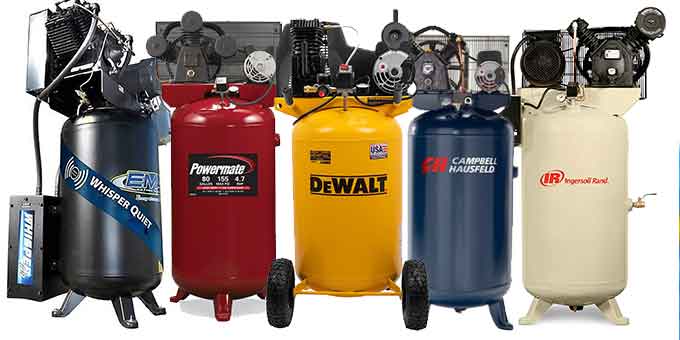
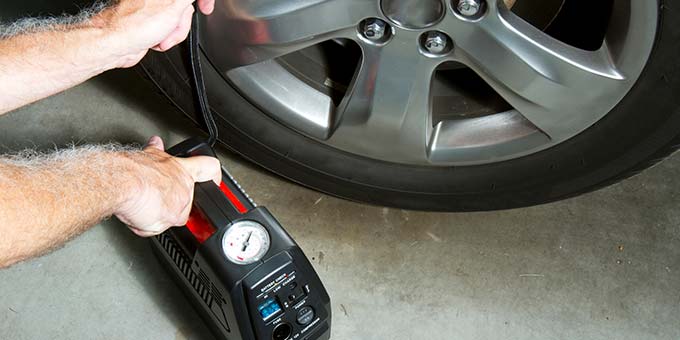
Air compressors have proven to be some of the best pieces of equipment to pump up your air tools. Additionally, you can use air compressors to pump up your tires with a simple switch turn. These machines use a motor and air storage tanks to provide the right amount of air for your needs, and they also use a piston and chamber to create maximum pressure and deliver air in the best way possible.
Typically, most air compressors are designed to be on the job site and work best to power up air tools, such as nail guns and paint sprayers. However, you may still need to deliver compressed air to your car, lawnmower, or bicycle tires, and using an on-site air compressor may not be the best idea to take.
In these cases, it’s a great idea to get portable air compressors since you can easily take them wherever you are and start pumping air to your tools. Most portable air compressors require very little maintenance and work for everything from air tools to bike tires to filling up sports equipment with compressed air.
There are many options to consider when it comes to the best portable air compressors, so we understand it may be a challenge for you to choose one if you’ve never used a portable one. In the Air Compressor Club, our goal is to make your purchasing experience much more comfortable for everyone, so we made a list of the top portable air compressors you can currently get on the market.
Whether you want a reliable tool to power up your pneumatic tools or tires, you’re most likely to find something that works for you on this list.
What Are Portable Air Compressors?
As you may have guessed already, a portable air compressor is a slimmed-down version of the regular air compressor, and its job is to supply air on any site the user needs. It’s important to note that not all sites have a stationary compressor, so having a compact compressor can certainly come in handy.
Many users think that a portable air compressor may deliver as much air pressure as stationary compressors. Depending on the product, you may be able to provide all the air pressure you need for pneumatic tools. It’s important to note that you may choose a product that suits your needs; you don’t necessarily have to purchase the most powerful air compressor.
What Are the Different Air Compressor Types?
The first thing you must keep in mind before choosing the best air compressor is its type. There are five different air compressor types, so make sure to read the following list to determine which type suits your needs the best.
Hand-Carry Air Compressor
These compressors are the smallest on this list, meaning they’re the easiest to carry. If your goal is simple to inflate car tires, balls, and other lightweight tools, these may work perfectly for your needs. These are also some of the quietest portable air compressors you can find on the market.
Hand-carry Compressors on the Market
- Air Inflator
- Pancake Air Compressor
- Hot Dog Air Compressor
- Twin Stack Air Compressor
Wheeled Portable Air Compressor
As the name implies, these compressors have wheels so that you can move them around; this is because these products tend to be much heavier than the rest. Additionally, you may find both electric or gas-powered compressors on the market regarding this type.
Wheeled Compressors on the Market
- Portable Horizontal/Vertical Air Compressor
- Wheelbarrow Compressor
Mobile Air Compressor
Finally, mobile compressors are mostly used in vehicles in emergency cases. If the vehicle gets a punctured tire, you may use one of these products to fill them up with air promptly.
Mobile Compressors on the Market
- DC Compressor
- Truck-Mount Compressor
- Tow-Behind Compressor
Choosing Between AC-Powered and Battery-Powered Compressors
Finally, you may choose between AC-powered and battery-powered compressors. In essence, AC-powered compressors need an electrical outlet to work, whereas the other type relies on battery power to keep working. Battery-powered compressors are much better if you’re planning on taking them on the road for emergencies. If that’s not your case, using an AC-powered option could be the best alternative to take.
How Can You Choose the Best Portable Air Compressor for Optimal Air Pressure?
As mentioned before, it mostly depends on your current needs. If you want maximum pressure for inflating tires or powering up tools, you may need to go for a product with more power.
In essence, you must look for a small compressor that has enough CFM (Cubic Feet/Minute) and PSI (Pounds per Square Inch). These factors tell you how much air the compressor can provide to your tools. If you don’t know how to measure these things, you may ask a professional to help you. Remember small air compressors are also able to deliver maximum operating pressure.
The Best Portable Air Compressor for 2022
Now that you know how diverse mini compressors can be, it’s time to show you the best small air compressors for this year. If you’re looking for a new product to pump up your tires or your nail gun, make sure to keep reading this entire list:
1 - DeWalt Air Compressor


In this case, DeWalt delivered users with a highly reliable pancake air compressor, which offers stable performance regardless of where you use it. Keep in mind that this product only weighs 30 pounds, so if you’re looking for a comfortable and portable air compressor, this may be the best choice for you.
Overall, this compressor features a six-gallon tank, and it’s highly recommended for cold weather climates. Some other features from the DeWalt pancake compressor include a high-flow regulator, dual couplers, and a 75.5-decibel noise level, which is great. Finally, this pancake-style tank compressor is also an oil-free compressor. While oil-lubricated compressors are not that complicated to use, having an oil-free product is amazing too.
You may read more about the DeWalt compressor on its Amazon page here.
2 - Makita Air Compressor
If you’re looking for the best air compressor for performance, this may be the best option for you. Overall, this product provides enough power to fill up two pneumatic tools simultaneously with 40 PSI and 90 PSI. Overall, this product’s pump features a cast-iron cylinder, making it highly durable.
Keep in mind that this is an oil-lubricated compressor, so you must ensure it has enough oil before you use it, as with all other oil-lubricated models.
One of the downsides to this cordless air compressor is that it’s one of the heaviest on this list. It weighs approximately 77 pounds, so it may not be as easy to carry around as other products.
If you want to read more about this product, you may go to its Amazon page here.
3 - California Air Tools CAT


While this portable air compressor features a small one-gallon tank, it’s still enough to fill tires and power up small tools promptly. Additionally, this is an oil-free pump coated with a thick steel frame, making it a durable product
It has a 0.6 HP motor that delivers 1.2 CFM at 90 PSI, which is suitable for regular tire inflation needs and small tools. The best feature about this product is that it’s a highly-quiet compressor, meaning you don’t have to worry since it only produces 57 decibels of sound. In essence, the sound that this compressor makes can be compared to that of a running fridge.
You may read more about this product on its Amazon page here.
4 - Craftsman Air Compressor


This six-gallon air compressor delivers one of the best performances for a compressor due to its high-efficiency motor. Overall, it works at 2.6 S-CFM at 90 PSI, and its dual couplers allow the user to attach a coiled hose and other tool combinations without any problems. Keep in mind this product’s bottom is supported by rubber feet, so you don’t have to worry about stability.
Unfortunately, one of the downsides to this six-gallon air compressor is that it produces way too much noise for a portable product. In essence, it delivers 78.5 decibels of sound. While it’s not that high compared to a regular compressor, it may be too much if the only thing you want it for is to fill up your car tires.
You may read more about this product on its Amazon page here.
5 - Campbell Hausfeld Compressor (6-Gallons)


The Campbell Hausfeld compressor is good for any task. It has a six-gallon tank of air volume, which is big enough, and it still keeps it relatively lightweight for the user to move around. Additionally, it features a maximum tank pressure of 125 PSI.
As for the motor, it provides 2.4 CFM at 90 PSI. While Campbell Hausfeld products are known for providing too much noise, this one only creates about 68 decibels of sound, which is acceptable for most cases.
People love this product because of its small footprint; this means you can store it anywhere you like without having to worry about taking up too much space. Additionally, since the motor has a fairly low amp draw, you’re not likely to trip up any circuit breakers.
You may read more about this product on its Amazon page here.
Bottom Line
As long as you know where to look, you’re likely to find a product that works for you. If you’re looking for the top-rated compressor options for this year, you may take a look at this or other of our articles on our website. We are the Air Compressor Club, and we want you to make the best purchasing decision possible!